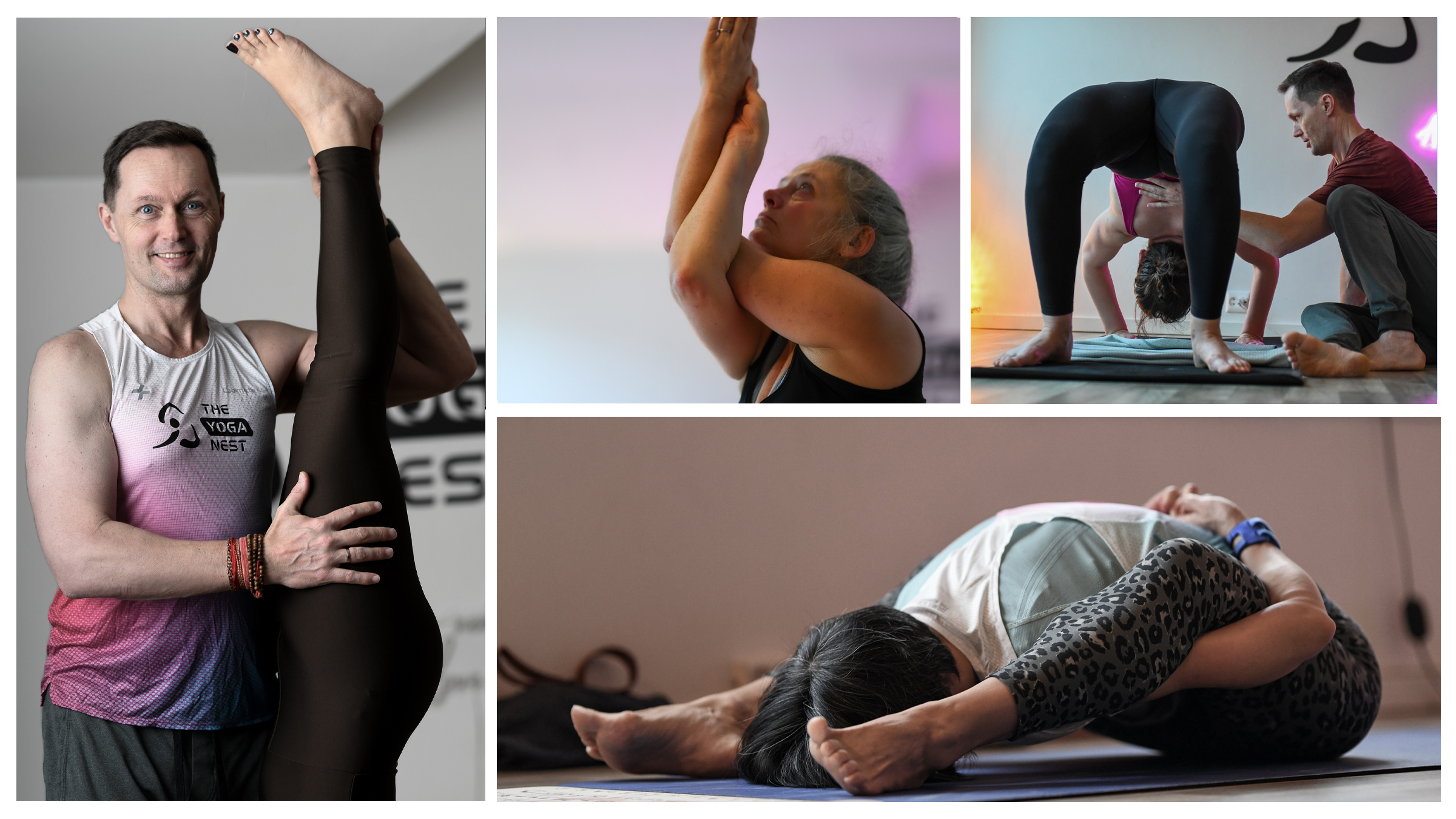
There is a saying in the Ashtanga tradition, attributed to the late Sri K. Pattabhi Jois: “Do your practice and all is coming.” Four words. Radical in their simplicity. And yet, for the thousands of practitioners around the world who have dedicated themselves to this ancient system of yoga, those words carry the weight of lived truth.
Ashtanga Yoga is not a gentle style. It makes demands of you — of your body, your breath, your attention, your willingness to show up even when everything in you resists. And that, paradoxically, is precisely why it works. Not only on the mat, but in every dimension of life.
What Is Ashtanga Yoga?
Ashtanga Yoga is a dynamic, flowing style of yoga systematised by Sri K. Pattabhi Jois in Mysore, India, based on ancient teachings found in the Yoga Korunta. The practice links breath with movement — a technique known as vinyasa — creating an internal heat that purifies the body and calms the mind.
The system is structured around six series of postures, each building upon the last. Most practitioners spend years — sometimes an entire lifetime — deepening their work within the Primary Series alone. This is not a shortcoming. It is the point. Ashtanga is a practice of progressive, patient refinement.
Three key elements anchor the practice:
- Tristhana — the union of posture (asana), breath (pranayama), and gaze point (drishti)
- Ujjayi pranayama — a slow, audible breath that regulates the nervous system and anchors attention
- Bandhas — internal energetic locks that stabilise the core and direct prana (life force) through the body
Together, these create a moving meditation — a practice that is simultaneously a physical challenge, a breathing exercise, and a training in concentration.
The Power of Consistency: Why Showing Up Matters
In a world of endless novelty and instant gratification, Ashtanga Yoga is countercultural. The traditional method calls for practice six days a week, with rest on Saturdays and during moon days. The same sequence, practised in the same order, day after day. To the uninitiated, this might sound monotonous. To those who have walked the path, it is anything but.
Repetition is the teacher. Each time you step onto the mat and move through the same sequence, you are not doing the same thing — you are different. Your body is different. Your mind is different. The practice becomes a mirror, reflecting back to you exactly where you are: how much sleep you got, how much stress you are carrying, whether you are resisting or surrendering.
This capacity to show up consistently — even imperfectly — is one of the most transferable skills Ashtanga cultivates. Athletes call it discipline. Entrepreneurs call it grit. Psychologists call it self-regulation. Whatever the label, it is the foundation upon which all lasting achievement is built.
Building Physical Strength and Resilience
The physical benefits of a consistent Ashtanga practice are profound and well-documented. The Primary Series alone — known in Sanskrit as Yoga Chikitsa, meaning “yoga therapy” — works systematically through the entire musculoskeletal system. Forward folds lengthen the hamstrings and decompress the spine. Arm balances build extraordinary upper-body and core strength. Deep hip openers release chronic tension patterns held in the pelvis and lower back.
But the physical transformation goes deeper than flexibility and muscle tone. Regular practitioners develop a kind of functional resilience — the body becomes more durable, more capable of recovering from effort and stress. Injuries, when they occur, heal more quickly. Energy levels stabilise. Sleep improves. The immune system strengthens.
And perhaps most significantly: you learn to be comfortable with discomfort. To breathe through challenge rather than flee from it. This is not merely a physical skill — it is a life skill of enormous value.
Sharpening the Mind: Focus, Clarity, and Presence
One of the quieter but most powerful effects of Ashtanga practice is what it does to the mind. The demand for continuous present-moment awareness — tracking breath, alignment, gaze, and bandha simultaneously — is a rigorous training in focused attention.
Modern neuroscience supports what yogis have known for centuries: sustained, focused attention is a trainable skill, and one that transfers across contexts. Practitioners regularly report improvements in their ability to concentrate at work, to remain calm under pressure, and to make clearer decisions — not because they have tried to improve these things, but because the practice has quietly rewired the way their nervous system responds to challenge.
The Ujjayi breath, in particular, acts as a continuous anchor. When the mind wanders — as it inevitably does — the sound and sensation of the breath calls it back. Over months and years, this becomes automatic. You begin to notice, in daily life, when you have drifted from presence. And you have a tool to return.
Emotional Regulation and Stress Resilience
Ashtanga Yoga activates the parasympathetic nervous system — the body’s rest-and-digest response — through sustained rhythmic breathing and movement. This is the physiological antidote to chronic stress. Regular practice literally trains your nervous system to spend more time in a regulated, calm state, and to return to that state more quickly after activation.
For many practitioners, this shift is the most life-changing aspect of the practice. Situations that previously triggered anxiety or reactivity begin to feel manageable. Not because the situations change, but because your capacity to meet them expands.
There is also something profound about the ritual of practice itself. Showing up at the same time each morning, moving through the same sequence, creates a stable point of reference in an often chaotic life. The mat becomes a sanctuary — a place where you know what to do, where the rules are clear, and where the only task is to breathe and move and be present.
Cultivating Patience and Humility
Ashtanga is a humbling practice. There will always be a posture you cannot yet do. A transition that eludes you. A day when you feel as though you have forgotten everything. And yet, you return. You try again. You learn to measure progress in months and years rather than days and weeks.
This is one of the practice’s most underrated gifts: the cultivation of patience. In a culture that celebrates speed and instant results, learning to work steadily toward a long-horizon goal — trusting the process without demanding immediate evidence of progress — is a rare and powerful quality. It changes how you approach projects, relationships, creative work, and goals of all kinds.
Humility, too. Ashtanga teaches you that the body has its own wisdom and timeline. You cannot force a posture through will alone. You must earn it through consistent, respectful work. This lesson — that true mastery cannot be rushed or bypassed — applies just as powerfully to mastery in any field of life.
The Ripple Effect: How Practice Transforms Life Off the Mat
Ask any long-term Ashtanga practitioner what the practice has given them, and the answers rarely stop at the physical. They speak of greater clarity of purpose. Of more honest relationships. Of a deeper capacity for presence with the people they love. Of a quieter mind and a more open heart.
These are not coincidental side effects. They are the natural outcome of a practice that calls you, again and again, to meet yourself honestly — with all your resistances, your impatiences, your habitual patterns — and to breathe through them rather than away from them.
The discipline of the mat is the discipline of the life. The breath you learn to steady in a challenging posture is the same breath you reach for in a difficult conversation. The equanimity you cultivate when a pose refuses to come is the same equanimity that sustains you when a project stalls or a relationship struggles.
Starting Your Ashtanga Journey
If you are new to Ashtanga, the most important thing is to find a qualified teacher who can guide you safely through the postures and, crucially, the breathing. The Mysore-style class — in which students practise the sequence independently at their own pace while the teacher moves through the room offering individual guidance — is the traditional and most effective way to learn.
Begin with the commitment to come consistently. Not every day needs to be perfect. Not every session will feel good. What matters is the return — the steady, patient, faithful return to the mat. It is in that returning that the real practice lives.
And in time — perhaps sooner than you expect, perhaps later — you will begin to notice the changes. Not just in your body. In the way you carry yourself through the world. In the quality of your attention. In the steadiness of your responses. In the depth of your peace.
Do your practice. All is coming.
Ready to begin your Ashtanga journey? Join us at The Yoga Nest in Stavanger. We offer Mysore-style classes and guided Ashtanga sessions for all levels. Get in touch to find the right class for you.